Word-of-Mouth Marketing

Advertiser vs. Consumer!

This is a very good (& funny) video depicting the pitfalls of print media and other traditional forms of advertising… pair it with the earlier post, “The Big Drop Off” by Seth Godin, and hopefully it will all come together for you.

Successful Pro Lumberyards that we’ve dealt with have all had one thing in common: a very loyal “first circle.” The question then becomes, “How do we get the first circle to keep talking about us?” Now we’re getting into the effectiveness of WOMM.

trash-can-snipping-tool11

Lumberyards might want to re-think that “next $5,000” they spend on advertising. A couple of good quotes we frequently reference:

(1) “Advertising is the cost of being boring. If your customers won’t talk about your stuff, you have to pay newspapers to get people to talk about you.” –Andy Sernovitz, Word of Mouth Marketing Book

(2) “Advertising…can work for MegaBrands like Coke…for the rest of us, traditional advertising is so wide and broad that it is ineffective.” –DM Scott, The New Rules of Marketing & PR

Instead of advertising to the masses, wouldn’t it be a more effective to get your loyal customers (first circle) TALKing, and telling their colleagues about your exceptional service and products?

Rally your fans! They’re often your best salespeople…
Golden State Warriors vs YOU!

Do we work this hard to get new customers?  (And if you think about it, none of what they did really even cost them that much $$…)

[post by Andy Sernovitz]

In professional sports, the term “free agent” refers to an athlete who is free to sign a contract with any team. But, as one sports writer pondered, what happens when a fan declares their own free agency? Free for anyone to earn and sign?

Scott Soshnick sent the same memo to every team in the four major U.S. sports leagues: The NFL, NBA, Major League Baseball, and the NHL. In it, Scott declared his free agency as a fan, said he was theirs for the taking, and offered a lifetime of allegiance. All they had to do was tell him why he should pick their team.

Of the 122 teams that make up the four major leagues, all but nine ignored Scott’s note. Eight of those that responded made offers ranging from marketing materials to invitations to use the owner’s court-side seats — all pretty amazing considering 113 teams didn’t respond at all.

But one team, the NBA’s Golden State Warriors, went all out. In addition to sending Scott his own personalized Warriors jersey, they also:

  • Called to say they wanted him as a fan and asked for a photo
  • Had 28 employees from various departments send him emails
  • Had fellow New Yorker and then-Warriors General Manager Chris Mullin call to make the team’s case
  • Sent Scott a “We Believe” slogan T-shirt with his face on it
  • Put together a mock press release announcing a new fan acquisition
  • Created a highlight DVD with rookies wearing Scott’s personalized jersey
  • Sent Scott a $1 lifetime contract, signed by Mullin

The Lesson: It can be astonishing at how little effort the majority of your competitors are making in doing special things to earn new fans. Yet, at the same time, every industry has their version of the Warriors — an organization that loves to amaze customers with fantastic service and special treatment.

When building your word of mouth program, the little things are a great start — they’ll quickly put you among the minority of companies willing to wow their customers. But we’d encourage you to not just settle for beating the lazy guys. Instead, assume your industry has someone working as hard as the Warriors and aim to outdo them.”

Pretty cool…  

The Big Drop Off

An excellent post this morning from Seth Godin; try and relate it to your WOMM campaigns and strategy!

“The big drop off

We try so hard to build the first circle.

This is the circle of followers, friends, subscribers, customers, media outlets and others willing to hear our pitch. This is the group we tell about our new product, our new record, our upcoming big sale. We want more of their attention and more people on the list.

Which takes our attention away from the circle that matters, which is the second circle.

The second circle are the people who hear about us from the first circle.

If the first circle is excited about what we do and it’s remarkable enough to talk about, they’ll tell two or six or ten friends each. And if we’re really good, the second circle, the people we don’t even know–they’ll tell the third circle. And it’s the third circle that makes you a hit, gets you elected and tips your idea.

The big drop off is the natural state of affairs. The big drop off is the huge decline that occurs between our enthusiasm (HEY! BUY THIS!) and the tepid actions of the first circle (yawn). Great marketers don’t spend their time making the first circle bigger. They spend all their time crafting services, products and stories that don’t drop off.”

The original Post can be found here.

Own Your Zip Code!!!

“Happy customers are your best advertisers; if they like you and like what you do, they will tell their friends.” (Andy Sernovitz)

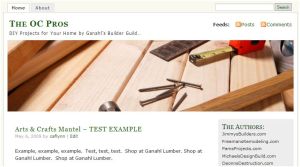
We had a customer looking to increase DIY revenue; rather than advertise in the local newspaper, and spend thousands of dollars at that doing so, we proposed that they engage in a WOMM Campaign.

So, we created the following Blog site (draft example) for them:

TheOCpros home page

http://theOCpros.com/

The Concept is Simple:

  • Content geared towards DIY projects, using supplies stocked at Pro Lumberyard
  • Exclusive “Builders’ Guild” or “Ambassador” program; builders earn the privilege of author status of the blog
  • Builders able to market themselves and promote their own work, via their blog posts, a URL-link to their own site, etc. The Blog Authors will immediately become THE EXPERTS in the Community. That means more jobs.
  • Lumberyard branded as the “go-to” destination for expert advice and quality materials
  • The Empty Bin manages the WOMM 5-T process, assist builders in photographing DIY projects & writing posts

People want Local; and they understand community.

Don’t believe me? See Seth’s post here: http://sethgodin.typepad.com/seths_blog/2009/01/time-to-start-a.html

Get After These Guys!

Here’s a link to the Top 50 Construction Blogs:

http://constructionmanagementdegree.org/?page_id=57

… and a link to the Top 100 DIY Blogs:

http://constructionmanagementdegree.org/?page_id=113

Most of these sites are getting thousands of visitors a month! So why not get after them!!

Likely you’ll never hard-sell any of the Authors – but how about donating a new product that you’re stocking for the Blog Author to trial? Most certainly they’ll mention your generosity and professional service on the Blog Post, not mention you’re helping them with one of the most difficult things when running a Blog: content!

Even simply participating in the Blog Post discussions can be effective, just remember one important rule: you’re best to provide useful content and insight in the comments section of the post, as plugging your company is a recipe for certain failure.

Your goal should be to “join” the conversation, not to change it.

The Purpose of a Book Cover

Post from Seth Godon’s Blog:

The purpose of a book cover

(and I think it works for lots of products)

Is the purpose of the cover to sell books, to accurately describe what’s in the book, or to tee up the reader so the book has maximum impact?

The third.

It’s the third because if the book has maximum impact, then word of mouth is created, and word of mouth is what sells your product, not the cover.

Tactically, the cover sells the back cover, the back cover sells the flap and by then you’ve sold the book. If those steps end up selling a book that the purchaser doesn’t like, game over. So you have to be consistent all the way through and end up creating a conversation after the purchase. Books are better at creating conversations than most products (when was the last time you talked about a pool cue), but there’s lots of opportunity here, no matter what you make.

Some ways that a book cover can accomplish its mission:

  • Iconic (because iconic items tend to signal ‘important’)
  • Noticeable across the room (you see that lots of other people own it, thus making it likely that you’ll want to know why)
  • Sophisticated (because this helps reinforce that the ideas inside are worthy of your time)
  • Original (why bother reading a book you already know)
  • Clever
  • Funny
  • Generic (reminding you of a genre or another book you liked, not generic as in boring)

I don’t know about you, but I judge books by their cover every day.”